
Blinds For Sliding Doors & Open-Plan Living

That sliding door is one of the reasons why you fell for this house; floor to ceiling glass, the garden making for a stunning backdrop for the lounge, sunlight doing exactly what sunlight should do on a Saturday morning all makes a house feel like a dreamy home.
Then 2pm arrives, the sun swings round, and the whole room turns into a greenhouse while your curtains hang there looking decorative and doing absolutely nothing useful.
Open-plan living has a glass problem, and most home owners will sliding doors and big windows know exactly what we are talking about.
The good news is that this problem has a really simple solution, and it’s not the one everyone assumes.
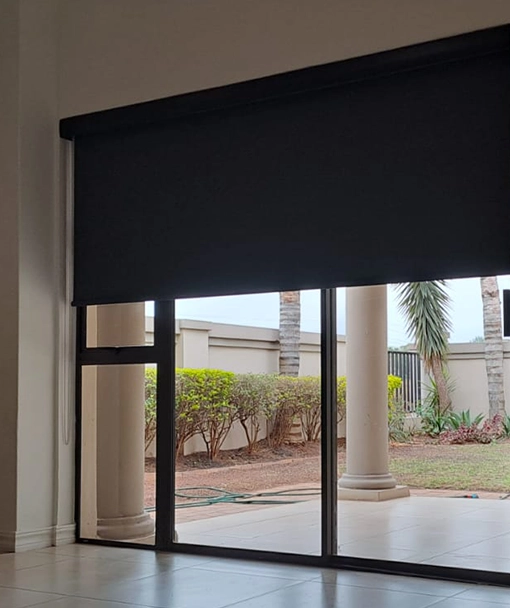
Why Standard Curtains Just Don’t Work on Sliding Doors
A sliding door needs a window covering that moves the same way it does, sideways, cleanly, and without bunching into a heap that blocks half the opening.
Curtains hung on a track over a slider tend to pool at one side, taking up space you were counting on for furniture or foot traffic.
On wide openings, that pooled fabric can eat up close to half a metre of usable wall, which makes a huge, unsightly difference in an open-plan layout where every centimetre is doing double duty as living space and light source.
Blinds are an ideal solution to this because they’re designed for exactly this kind of movement.
The two styles that are best for use on sliding doors are vertical blinds and panel glide blinds, and they solve the problem in two different, but equally useful ways.
Vertical Blinds Are the Reliable All-Rounder
Vertical blinds hang as individual slats from a headrail, each one rotating up to 180 degrees on command.
This gives you precise control over light and privacy throughout the day, since a small turn of the wand can soften harsh afternoon sun without blacking out the room entirely.
They stack compactly to one side when opened, usually needing less space than a bulkier system, which suits homes where there is not much wall space beside the door.
Vertical blinds also tend to be the more budget-friendly option for wide openings, and slats are really easy to wipe clean individually.
Panel glide blinds Are the contemporary choice
Panel glide blinds use wide fabric panels, typically three or four per track, that slide flat along the top of the opening and stack neatly behind one another.
Rather than tilting like vertical slats, each panel is either covering the glass or tucked out of the way, which gives a cleaner, more uninterrupted look when closed.
This makes panel glides a natural fit for contemporary interiors where a seamless line is as important as easy function.
The trade-off is that wide panels need enough stacking space at the side of the door to open fully, so measuring that available depth is something to do before you fall in love with the look.

A Quick Comparison Of the Two Options
| Feature | Vertical blinds | Panel glide blinds |
| Light control | Adjustable in 180 degree increments | Fully open or fully closed per panel |
| Stacking space needed | Compact, narrow stack | Wider, needs more side clearance |
| Visual style | Practical, timeless | Sleek, contemporary |
| Typical cost | More affordable | Higher, due to panel size and mechanism |
| Best suited to | Budget conscious, frequent light adjusting | Modern open-plan spaces, design focused rooms |
Measuring For Your Specific Opening
Getting the fit right starts with 3 things: the full width of the sliding door track, the height from the track to the floor or sill, and the depth of wall or return space available for the blind to stack into once opened.
A door measuring 2.4 to 3.6 metres wide is common in South African new builds, and this range sits comfortably within what both vertical and panel glide systems are designed to span.
Skipping the stacking depth measurement is the single most common mistake homeowners make, since a blind that fits the door perfectly but has nowhere to stack ends up permanently half open.
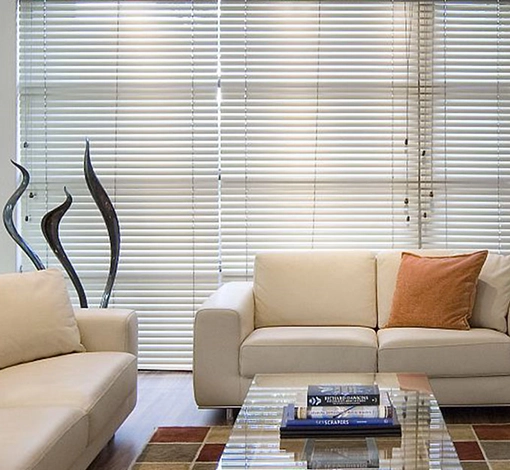
Motorisation isNot a Luxury Add-On
Motorised blinds have moved from novelty to a useful and accessible upgrade over the past few years, particularly on hard-to-reach sliding doors with high headrails or awkward wall placement.
A remote or app-controlled system removes the hassle of reaching across furniture to adjust a wand, and it also protects the mechanism from the wear that comes with constant manual handling.
If you have several large openings across an open-plan area, motorisation on even one or two of the busiest doors can be really convenient.
Get Some Advice Before You Buy Blinds
Blinds for sliding doors come with a little more engineering than most people expect, from headrail weight limits to fabric behaviour in coastal or high UV conditions.
A proper consultation, measured on site rather than guessed from a tape measure and a little bit of hope, will help you handle these details before they become a costly reorder.
Manley Blinds works across South Africa, helping business and homeowners with their measuring and fitting experience, matching the blind type to door size, light conditions and how a household actually uses the space day to day, perfectly.
The right blind on a sliding door gives an open-plan room back its comfort, without losing the view that made you want the house in the first place. Contact us today for more information.
Frequently Asked Questions
What type of blinds work best for sliding doors?
Vertical blinds and panel glide blinds work best for sliding doors, since both stack to one side rather than bunching in the middle, allowing the door to open fully without obstruction.
How much space do sliding door blinds need to stack?
Vertical blinds typically need a narrower stacking space than panel glide blinds, though the exact clearance depends on the door width and the number of panels or slats specified.
Are motorised blinds worth it for sliding doors in South Africa?
Motorised blinds are worth considering for sliding doors with high headrails or heavy daily use, since they reduce manual wear on the mechanism and remove the need to reach across furniture to adjust them.
Can blinds fully block sunlight on a sliding door?
Blockout fabrics on either vertical or panel glide blinds can fully block sunlight when closed, though vertical blinds offer finer adjustment for filtering light throughout the day rather than an all or nothing setting.
What is the standard width for sliding door blinds in South Africa?
Sliding doors in South African homes commonly measure between 2.4 and 3.6 metres wide, a range that both vertical and panel glide blind systems are designed to accommodate.